Protection Against Whistleblower Retaliation,

Whistleblowing, the act of exposing illegal or unethical activities within an organization, is a cornerstone of transparency and accountability. Whistleblowers often risk their careers and reputations to bring wrongdoing to light, playing a vital role in protecting public health, safety, and the integrity of financial markets.
However, the act of whistleblowing can expose individuals to retaliation from their employers or colleagues. To encourage reporting and protect those who speak out, numerous laws have been enacted at both the federal and state levels.
State and Federal Whistleblower Protection Laws
California Laws
California’s whistleblower laws are considered among the strongest in the nation. Key statutes include:
- Labor Code Section 1102.5: Protects employees who report violations of state or federal law that they reasonably believe pose a threat to public health or safety or constitute a violation of a statute, rule, or regulation.
- California Whistleblower Protection Act (CWPA): Primarily protects state employees who report waste, fraud, abuse of authority, violations of law, or threats to public health.
How Whistleblower Laws Protect Employees
Protection Against Retaliation
Whistleblower protection laws shield employees who come forward to report illegal or unethical activities within their organizations. These laws explicitly prohibit employers from taking any adverse action against an employee simply because they reported a violation.
This protection extends to a wide range of retaliatory actions, including termination, demotion, harassment, reduction in pay or hours, negative performance evaluations, or any other act that could be seen as punitive or discriminatory. The goal is to ensure that employees feel safe to report wrongdoing without fear of jeopardizing their employment or facing other negative consequences.
Scope of Protection
Whistleblower protection laws cover various forms of protected activity. While the specifics can vary depending on the jurisdiction and the law, the protection generally extends to both internal reporting (disclosing violations to supervisors, human resources, or other internal channels) and external reporting (reporting to government agencies, law enforcement, or the media).
Additionally, some laws offer protection to employees who participate in investigations of wrongdoing or those who refuse to engage in activities that they believe are illegal or violate regulations.
This comprehensive approach ensures that employees are protected regardless of how they choose to report or address the violation, fostering an environment where speaking up is encouraged rather than feared.
Remedies for Retaliation
When an employer violates whistleblower protection laws and retaliates against an employee, contact the best whistleblower attorney. One of the primary remedies is reinstatement, where the employee is returned to their previous position or an equivalent role. This can be particularly important for individuals who have been wrongfully terminated.
Additionally, the employee may be entitled to backpay, which covers the wages and benefits they would have earned if not for the retaliation.
Beyond financial compensation, whistleblower laws often allow for damages to address emotional distress, reputational harm, and other non-economic losses resulting from the retaliation.
To further deter retaliation, these laws often provide for the recovery of attorney’s fees and costs, easing the financial burden on whistleblowers seeking legal recourse.
In particularly egregious cases, punitive damages may be awarded to punish the employer and discourage future misconduct.
Whistleblower protection laws maintain ethical workplaces and safeguard the public interest. Sometimes employers retaliate against whistleblowers. Here is where you will need to retain a whistleblower attorney to fight for your rights.
Featured Image Source: https://www.istockphoto.com/photo/symbolic-depiction-of-a-whistle-blower-or-informant-gm1746517244-543361818?utm_campaign=srp_photos_top&utm_content=https%3A%2F%2Funsplash.com%2Fs%2Fphotos%2Fwhistleblower&utm_medium=affiliate&utm_source=unsplash&utm_term=w
California’s “Outside Sales Exemption” – When Does It Apply?,

California labor laws include specific rules and exemptions for workers classified as “outside salespeople.” This exemption significantly affects employee rights to minimum wage, overtime pay, and mandated rest/meal breaks.
What Employee Rights Are Affected By The Outside Sales Exemption?
California’s outside sales exemption exempts outside salespeople from some of the state’s labor laws. These exemptions can be significant, but it’s important to correctly classify employees to ensure compliance with the law.
The most common employee rights affected by the outside sales exemption are:
- Minimum wage laws: Outside salespeople are generally exempt from minimum wage laws in California. This means that employers are not required to pay them at least the minimum wage for all hours worked.
- Overtime laws: Outside salespeople are also exempt from overtime laws. This means that employers are not required to pay them overtime pay for hours worked over 40 in a work week.
- Rest and meal breaks: Outside salespeople may be exempt from some or all rest and meal break requirements.
What Is An Outside Salesperson?
An outside salesperson is defined as someone who meets all three of the following criteria:
- 18 years of age or over
- Customarily and regularly works more than half of their working time away from the employer’s place of business
- Sells items or obtains orders for products or services
Here are some examples of sales tasks that qualify as outside sales under this definition:
- Traveling to and from customer locations
- Meeting with customers outside of the office
- Stocking a vehicle with products for sale
More Than Half Of The Working Time
California labor laws for exempt employees puts specific emphasis on the amount of time an employee spends working outside the workplace. To qualify as an outside salesperson, the employee must customarily and regularly work more than half their working time away from the employer’s place of business.
Customarily means more than occasionally and as part of the employee’s usual work practice. Then again, regularly means the activity is performed frequently and recurringly.
The majority of an outside salesperson’s workday must be spent on activities like:
- Visiting customers’ homes or businesses
- Making sales presentations off-site
- Attending trade shows or industry events
- Traveling between sales appointments
Place Of Business
The concept of a traditional office or fixed workspace can be tricky for outside salespeople. California law defines an employer’s place of business as a fixed location belonging to or controlled by the employer.
Job Duties Involving Selling Or Obtaining Orders
For an employee to meet the outside sales exemption, their primary duty must involve either:
- Selling tangible or intangible items
- Obtaining orders or contracts for services or the use of facilities
What If An Employer Makes A Mistake In Determining Employee Exemption?
Misclassification of employees as exempt outside salespeople when they don’t meet the necessary criteria is a serious issue. If an employer makes a mistake, there can be significant consequences, including:
- Back wages
- Penalties and fines
Misclassified employees may be entitled to sue their employers for damages. These lawsuits can be costly, even if the employer ultimately wins.
What Can Employees Do?
If you suspect you have been misclassified as an outside salesperson and believe you are entitled to overtime and other benefits, here are steps you can take:
Consult an Attorney. An employment lawyer can review your specific situation. You may be able to file a complaint with the California Division of Labor Standards Enforcement (DLSE).
Is There A Federal Law Regarding Exempt Outside Sales Workers?
The Fair Labor Standards Act (FLSA) provides a federal exemption for outside sales employees from minimum wage and overtime requirements. The federal definition of an outside salesperson is generally like California’s, but with some key differences:
The FLSA does not have a “more than half the working time” requirement: Federal law doesn’t specify the percentage of time an employee needs to spend working away from the employer’s place of business. Unlike some other FLSA exemptions, there’s no minimum salary threshold for outside salespeople to be considered exempt.
Important .
If you suspect misclassification has occurred, whether you are an employee or an employer, seeking legal advice is crucial. An employment law attorney can assess your specific circumstances and explain the best course of action.
Featured Image Source: https://www.infinitihr.com/media/blog/the-possibilities-of-commission-pay/
Common Questions About the Rights of Salaried Employee Rights in California,
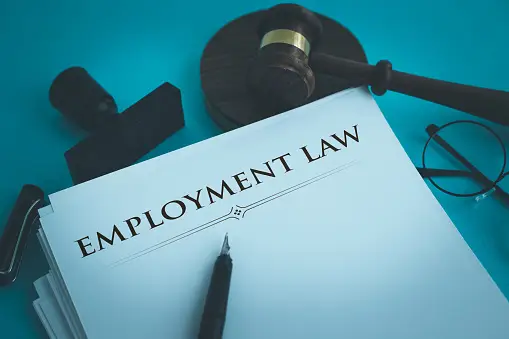
California has several laws in place to protect the rights of salaried employees. These laws cover a wide range of topics, including minimum wage, overtime pay, meal and rest breaks, and discrimination.
It is important for salaried employees to be aware of their rights so that they can protect themselves from being taken advantage of by their employers. If you have any questions about your rights as a salaried employee in California, please consult with a lawyer.
What are the Basic Rights of Salaried Employees in California?
Salaried employees in California, whether exempt or non-exempt, are entitled to certain fundamental rights under state labor laws:
Minimum Wage
All employees, including salaried ones, must receive at least the minimum wage established by California law. As of 2024, the minimum wage in California is $15.50 per hour. This means that even salaried employees must earn a minimum weekly or monthly amount that equates to at least the minimum hourly rate for the hours they work.
Overtime Pay (Non-Exempt Employees)
Non-exempt salaried employees have the right to overtime pay if they work over 40 hours in a week or over 8 hours in a day. Overtime pay is typically 1.5 times their regular rate of pay. This ensures that even salaried employees are compensated for additional hours worked beyond the standard workweek.
Meal and Rest Breaks
California law mandates meal and rest breaks for employees, including salaried workers. After working for a certain number of hours, employees are entitled to a 30-minute unpaid meal break and paid 10-minute rest breaks. These breaks are essential for employee well-being and are protected under state law.
Protection Against Discrimination and Harassment
Salaried employees are shielded from discrimination based on protected characteristics like race, gender, age, religion, disability, and sexual orientation. They also have the right to a workplace free from harassment, creating a safe and inclusive work environment.
Sick Leave
California’s paid sick leave law applies to all employees, including salaried workers. Employees accrue paid sick leave based on their hours worked and can use it for their own illness or to care for a family member.
Other Leaves
Salaried employees might also be entitled to other leaves like family leave, pregnancy disability leave, and bereavement leave, depending on the specific circumstances and the employer’s policies.
Can Employers Deduct Wages from Salaried Employees in California?
California law strictly regulates the circumstances under which employers can deduct wages from salaried employees. Understanding these regulations is crucial for both employers and employees to ensure fair compensation practices.
California Labor Code Section 224 outlines permissible deductions from salaried employees’ wages. These deductions generally fall under the following categories:
- Deductions mandated by federal, or state law are allowed, such as taxes, social security contributions, and court-ordered wage garnishments.
- Deductions for specific purposes, like health insurance premiums or retirement plan contributions, are permissible if the employee provides written authorization.
- Employers can deduct losses or damages incurred by the employee in the course of employment, but only if these are directly attributable to the employee’s willful or dishonest conduct. This includes situations like cash shortages caused by the employee’s negligence.
California law explicitly prohibits certain deductions from salaried employees’ wages. These include:
- Employers cannot deduct losses resulting from ordinary business operations or circumstances beyond the employee’s control.
- Deductions for accidental breakage or cash shortages are not allowed unless the employee acted dishonestly or with gross negligence.
- Employers cannot deduct the cost of uniforms or equipment required for the job unless these costs bring the employee’s earnings below the minimum wage.
If you are a salaried employee in California and believe your employer has made improper deductions from your wages, consult with a lawyer for California salaried employee laws. They can assess your situation, explain your rights, and help you take appropriate legal action if necessary.
Know your rights as a salaried employee in California. If you have concerns about your pay or deductions, consult with a lawyer today.
Featured Image Source: https://www.istockphoto.com/photo/employment-law-gm1150477605-311444178?utm_campaign=srp_photos_top&utm_content=https%3A%2F%2Funsplash.com%2Fs%2Fphotos%2Femployment-law&utm_medium=affiliate&utm_source=unsplash&utm_term=employment+law%3A%3A%3A
8 Advantages You Gain by Partnering with an Exceptional Whistleblower Attorney [Infographic],
When navigating the intricate landscape of whistleblowing, aligning with the best whistleblower attorney can make all the difference. These legal professionals possess expertise in whistleblower laws, adept negotiation skills, and a commitment to safeguarding their clients’ rights.
From providing invaluable guidance through the complex whistleblowing process to offering protection against potential retaliation, the benefits of partnering with an exceptional whistleblower attorney are manifold. By familiarizing themselves with the advantages they offer, whistleblowers can confidently step forward with their disclosures, knowing they have a formidable ally by their side. This infographic succinctly outlines the myriad advantages gained by partnering with an exceptional whistleblower attorney, offering a visual roadmap to success in navigating complex legal terrain.

Filing a Complaint Against Your California Employer,

If you’re experiencing mistreatment or illegal activity in your workplace, it’s crucial to know that you have rights and options for recourse. Employers can face legal consequences for violating labor laws, and you may be entitled to compensation or other remedies. This guide will outline the process of protecting your rights as an employee and holding your employer accountable.
Know Your Rights
The specific rights you have in the workplace will depend on several factors, including:
- Your location
- Your employment status
- Your industry
However, some general rights apply to most employees in California. These are:
Discrimination and Harassment
You have the right to a workplace free from discrimination and harassment based on factors like race, color, religion, sex (including pregnancy), sexual orientation, gender identity, national origin, age (40 or older), disability, or genetic information. This includes protection from retaliation if you report discrimination or harassment.
Safe Workplace
Your employer has a responsibility to provide a safe work environment. This includes following safety protocols, maintaining equipment, and offering proper training. You also have the right to refuse unsafe work in certain situations.
Fair Wages and Overtime
You are entitled to be paid minimum wage for all hours worked and overtime pay for qualifying hours. The specific requirements for overtime may vary based on your profession and location.
Family and Medical Leave
Under the Family and Medical Leave Act (FMLA), certain employees may be eligible to take unpaid leave for serious medical conditions or to care for family members.
Record the Violations
Maintaining accurate records provides significant leverage when taking further action. Here’s how to effectively document workplace violations:
- Keep a detailed journal showing the date and time of the incident, location where it occurred, and names of those involved.
- Provide a factual, detailed description of what was said and done. Avoid emotional language – stick to the events themselves.
- Gather emails, memos, witness statements, or any other physical or digital proof that backs up your claims.
- If your organization has an internal reporting process for such violations, document when you submit reports, the recipient, and any actions taken or not taken by the company afterward.
Utilize Internal Complaint Procedures
Many companies have dedicated procedures for reporting workplace grievances. Before escalating the issue to external agencies, it’s often advisable to try resolving the matter within the company structure.
Carefully study your company’s employee handbook or policies. Look for sections reporting misconduct, harassment, discrimination, or similar concerns.
The handbook should outline steps to follow for complaints, often starting with your direct supervisor or an HR representative. Adhere to the company’s protocol for initiating a formal complaint.
Keep meticulous records of any internal complaints you file, the people you contacted, dates, and any responses you received. If your company follows its own procedures but fails to resolve the situation, this documentation will be helpful if you choose to take your claims outside the company.
File a Complaint with Government Agencies
If your employer has violated your rights and internal complaints haven’t yielded results, taking your complaint to a government agency may be the next step. Key agencies are:
- Equal Employment Opportunity Commission (EEOC)
- Department of Labor (DOL)
- Occupational Safety and Health Administration (OSHA)
Agencies have strict deadlines for filing complaints. It’s crucial to act quickly after the violation occurs or you could lose your right to file a claim. Deadlines for discrimination complaints, for example, are often within 180 days.
Seek an Employment Lawyer’s Help
While you can pursue complaints on your own, consulting an employment lawyer can significantly strengthen your case. They play a crucial role in cases like these. Here’s what a lawyer specialized in employment law can do:
- A lawyer carefully reviews the facts and circumstances of your case. They’ll identify relevant labor laws and let you know if you have strong legal grounds to pursue a claim.
- Filling out agency forms or preparing for litigation can be confusing. A lawyer assists with paperwork and procedural requirements.
- When a settlement cannot be reached, an experienced employment lawyer can sue your employer and advocate for your rights in court.
If you believe you’ve been the target of workplace misconduct, carefully consider the steps outlined in this guide. A qualified employment lawyer from Bartz Law Group can be your greatest ally in such situations. They help you navigate complex legal scenarios and fight to secure the justice you deserve. Don’t hesitate to seek legal counsel if you need support defending your rights as an employee.
Featured Image Source: https://unsplash.com/photos/stack-of-papers-flat-lay-photography-tQQ4BwN_UFs
How to File a Complaint Against Your Employer in California,

Navigating workplace conflicts can be extremely stressful. If you believe your employer in California has violated your rights, understanding the process for filing a complaint is crucial. This guide will walk you through the key things to consider before acting, how to document violations, exploring internal solutions, filing with government agencies, and the important role of employment lawyers in Southern California.
Understand Your Rights
Before initiating any complaints, understand what constitutes a workplace rights violation in California. Here are some common areas where employees might have grounds for complaints:
- Protection against discrimination based on race, gender, age, religion, disability, sexual orientation, and other protected categories.
- Unwanted behavior creating a hostile work environment.
- Issues with minimum wage, overtime pay, unpaid breaks, and improper deductions.
- Hazards or unsafe working conditions
- Being fired for illegal or discriminatory reasons
Document the Violations
Thorough documentation helps build a strong workplace complaint. Whenever you experience or witness a violation, record it meticulously. Here’s what to include:
- Note the exact dates and times of each incident.
- Describe the breach as much as possible. What was said or done? Who was involved?
- Include the names of any witnesses to the incidents.
- Save emails, memos, performance reviews, pay stubs, photos, or other forms of evidence that support your claims.
- If you communicated a concern or objection at the time of the incident, document how and when you did so.
Explore Internal Complaint Procedures
Many companies have established internal complaint procedures for employees to report workplace issues. Before filing with a government agency, you might be required to exhaust these internal options.
Review your employee handbook or company policies for information about internal complaint mechanisms and the steps you need to follow. Often, it’s advisable to contact your HR department to discuss your concerns and inquire about the appropriate resolution process. Depending on your company’s policies, you might need to report the issue to your direct supervisor or manager before escalating it.
File a Complaint with Government Agencies
If your employer has violated your rights and internal resolution attempts fail, the next step is often filing a complaint with a government agency. In California, here are the key agencies to consider:
Department of Fair Employment and Housing (DFEH)
The DFH handles discrimination, harassment, and retaliation complaints. You can file a complaint online, by mail, or in person at a DFEH office. Generally, you must file a complaint within one year of the violation.
Division of Labor Standards Enforcement (DLSE)
The DLSE forces wage and hour laws, including minimum wage, overtime, meal breaks, and rest periods. You can file a wage claim online or at a DLSE office. Deadlines vary based on the type of wage claim.
Occupational Safety and Health Administration (OSHA)
OSHA protects workplace health and safety. The process of submitting a complaint is via the website, by phone, mail, or at an OSHA office. Complaints about safety hazards should be filed promptly. Retaliation complaints should be made within 30 days.
Employment Development Department (EDD)
The EDD handles unemployment insurance and disability insurance claims. Complaints are generally initiated as part of the claims process, available on the EDD website.
Consult with an Employment Lawyer
Navigating workplace complaints and the legal process can be overwhelming. Experienced employment lawyers in Southern California can offer valuable guidance and representation.
A lawyer will thoroughly review your situation, explain your rights, and advise you on the strength of your potential claims. They will handle the complexities of filing complaints with the appropriate agencies and represent you during any investigations or proceedings. If necessary, an employment lawyer will passionately represent your interests in court.
When your workplace rights are violated, it’s essential to take informed action to protect yourself. Understanding ways to resolve it is the first step. If you experience mistreatment or violations at work, seek legal counsel and act promptly.
How Many Hours Are Required Between Shifts In California?,

California has some of the most employee-friendly labor laws in the United States. This includes laws regarding breaks and overtime pay. Many employees wonder how many hours they are legally required to be given between shifts. While there is no mandated minimum number of hours required between shifts, California does have laws in place that ensure employees receive meal and rest breaks.
How Many Hours Between Shifts Is Legal in California?
California labor laws do not require a minimum number of hours between shifts. This means employers have the flexibility to schedule shifts back-to-back or with very short breaks in between. This practice can lead to employee exhaustion and, in some cases, safety risks.
While there’s no state law ensuring time between shifts, it’s important to understand other California laws around meal and rest breaks. Employers must comply with these, as failure to do so can result in penalties or other legal action.
Meal Breaks
California law has strict requirements for meal breaks aimed at protecting the well-being of employees. Here’s what you need to know:
If you work more than five hours in a day, you’re entitled to a 30-minute uninterrupted meal break. This break must generally be taken before the end of your fifth hour of work.
In specific cases, an employee and employer may mutually agree to waive the meal break if the workday is no longer than six hours.
In some industries (like security guards or those whose work prevents them from being fully relieved of duty), “on-duty” meal periods can be agreed upon. These count as worked time and must be paid.
If an employer does not provide mandated meal breaks, they must pay the employee one extra hour of pay as a penalty, for each workday a meal break is missed.
Rest Periods
Separate from meal breaks, California labor laws also mandate rest periods to give employees short breaks throughout their workday.
If you work at least 3.5 hours in a day, you’re entitled to a paid rest period of at least 10 minutes. You receive a 10-minute rest break for roughly every 4 hours worked. For example, if you work an 8-hour shift, you should receive two 10-minute rest breaks during that time.
Rest breaks should be provided as close to the middle of each work period as possible.During rest periods, employees must be relieved of all work duties and allowed to leave the work area if they wish.
Employers who deny rest periods owe employees one additional hour of pay for each missed break.
Overtime
California overtime laws provide additional pay for employees who work beyond the standard thresholds. The key points include:
Daily Overtime:
- Any work over 8 hours in one workday is considered overtime.
- The first 4 hours of overtime must be paid at 1.5 times the employee’s regular rate.
- Any work beyond 12 hours in a workday is paid at double the employee’s regular rate.
Weekly Overtime:
- Any work over 40 hours in a given workweek qualifies as overtime and must be paid at 1.5 times the regular rate.
- For employees who work 7 consecutive days, any work on the 7th day is paid at 1.5 times the regular rate for the first 8 hours, then double time for any hours after that.
Calculation:
- Overtime calculations are based on the employee’s regular rate of pay, not their minimum wage.
Exemptions
Not all employees are covered by California labor laws regarding meal breaks, rest periods, and overtime. Common exemptions include:
- Executive, administrative, and professional employees
- Outside salespersons
- Specific industries like agriculture.
Even if an employee is exempt from some of these regulations, other labor laws and protections may still apply. If you’re unsure of your status, it’s always recommended to consult with an employment attorney in Southern California.
What if My Employer Violates My Rights?
Naturally, place the following keywords -employment attorney southern california
If you feel your employer is violating your rights to meal breaks, rest periods, or correctly paid overtime, you have options:
- Speak to your manager or HR. Sometimes violations are oversights. It’s worth raising the issue internally as the first step.
- File a wage claim. The California Labor Commissioner’s Office handles wage and hour disputes. You can file a claim online or at a local office.
- Consult an employment attorney in Southern California. An experienced attorney can explain your specific rights, determine the strength of your claim, and guide you through any legal action.
If you have suspicions that your employer may be violating labor laws, don’t hesitate to seek help. Consult with the California Department of Industrial Relations or reach out to an employment attorney for guidance and to address any potential violation of your rights.
Featured Image Source: https://blogassets.7shifts.com/2018/10/24-7-shift-schedule-examples.jpg
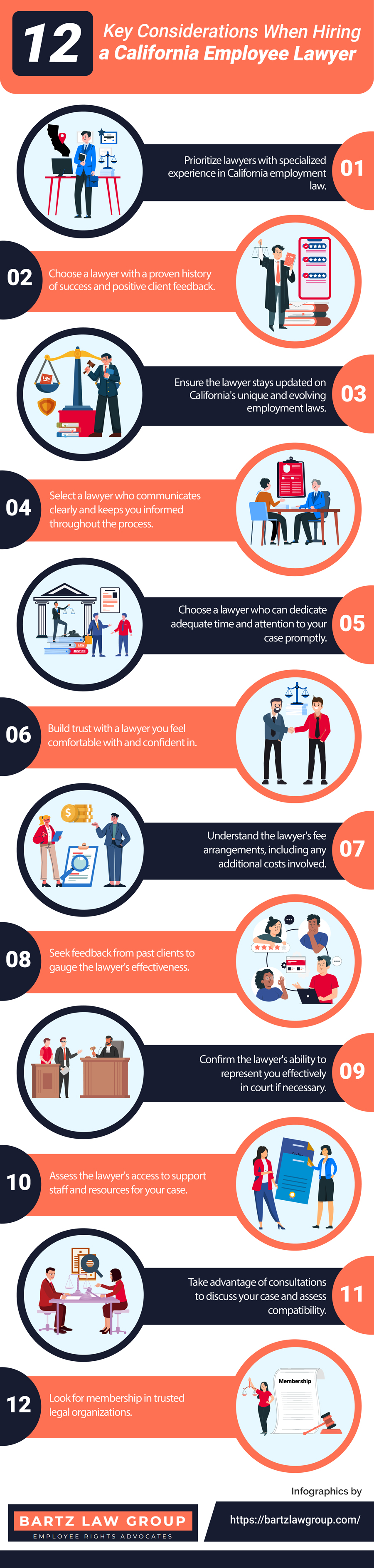
12 Key Considerations When Hiring a California Employee Lawyer [Infographic],
Finding the right lawyer is crucial for protecting your rights and interests as an employee when navigating the complexities of California’s employment laws. This state boasts some of the most comprehensive and constantly evolving labor regulations in the United States, making it essential to enlist the expertise of a qualified attorney who specializes in California employee law.
Having a trusted legal advocate can make all the difference when facing workplace issues like wrongful termination, discrimination, or wage disputes. By exploring key considerations shared in this infographic, individuals can make informed decisions and receive the representation they deserve.
What Is The Penalty For Not Paying Employees On Time In California?,

Employees in California have the right to be paid on time and in full for their work. When employers fail to meet this obligation, they face significant legal consequences. In this article, you learn the penalties California employers may face if they don’t pay employees on time.
When Should California Employees Be Paid?
California has strict laws about when employees must receive payment. The general rule is:
- Non-exempt employees: Must be paid at least twice per calendar month on designated paydays. Compensation earned between the 1st and 15th of the month must be paid by the 26th of the same month. Wages earned between the 16th and the end of the month must be paid by the 10th of the following month.
- Exempt employees: Paid at least once per calendar month on or before the 26th of the month.
When Must My Employer Give Me My Final Paycheck?
California has different rules for when an employee’s final paycheck must be issued depending on whether the employee quits or is terminated:
Employee Quits
If an employee quits without providing at least 72 hours of notice, their final paycheck is due within 72 hours. If the employee provides at least 72 hours of notice, wages are due on their last day of work.
Employee is Terminated
The employer must issue the employee’s final paycheck immediately upon termination.
Late Paycheck Damages
When a California employer fails to pay an employee their wages on time, the employee may be entitled to several types of damages. These include:
- Waiting Time Penalties: California’s Labor Code Section 203 mandates that if an employer willfully fails to pay any wages due, the employee may continue to collect wages as a penalty from the due date. The penalty is calculated as the employee’s average daily earnings for up to 30 working days.
- Liquidated Damages: Under specific circumstances involving bad faith or willful misconduct, courts may also award liquidated damages in an amount equal to the unpaid wages.
- Interest: Employees may also be entitled to collect interest on unpaid wages from the due date until the full payment is made.
What Happens If My Employer Is Late with My Paycheck?
If your employer is late with your paycheck, you have options:
- Start by talking to your supervisor, payroll department, or HR representative. An honest mistake could be the cause of the delay.
- If your employer refuses or is unable to pay, file a wage claim with the California Division of Labor Standards Enforcement (DLSE). The DLSE can help you recover unpaid wages and penalties.
- If you have a complicated case or are facing a significant amount of unpaid wages, consider consulting with a lawyer for California employee laws.
Employer Financial Penalties for Late Paychecks
California employers who don’t pay employees on time face more than just disgruntled employees. They may also be subject to financial penalties and legal action:
- Administrative Penalties: The DLSE can impose administrative penalties on employers who violate California’s wage and hour laws. These penalties can be substantial in cases of repeated or willful violations.
- Civil Lawsuits: Employees can file civil lawsuits against their employers for unpaid wages, penalties, and other damages, including attorney fees.
- Criminal Charges: In some cases of willful non-payment, employers may even face criminal charges.
Waiting Time Penalties Paid to Employees For Late Final Wages
Waiting time penalties, outlined in California Labor Code section 203, are significant consequences faced by employers who don’t pay final wages timely. Here’s what you need to know:
An employee’s daily rate of pay continues as a penalty from the due date of the final paycheck until the wages are paid, up to a maximum of 30 working days.
Employee Damages for Late or Incomplete Paychecks
Beyond waiting time penalties, employees may be entitled to other forms of compensation if their paychecks are late or incomplete.
Naturally, the employee is entitled to the full amount of wages they earned, regardless of when payment occurs.
In cases of willful misconduct or bad faith by the employer, an employee may be entitled to liquidated damages. These damages are often an amount equal to the unpaid wages.
California has robust laws in place to protect employees’ right to timely and complete payment. If your employer withholds or delays your paycheck, you don’t have to accept it. Contact the California Division of Labor Standards Enforcement (DLSE) or consult with a ‘lawyer for California employee laws’ for guidance.
Featured Image Source : https://unsplash.com/photos/woman-holding-sword-statue-during-daytime-DZpc4UY8ZtY
Understanding When Can You Sue Your Employer,

Can I hire a lawyer to sue my employer? This is a common question among employees in many organizations.
The truth is that resolving some employer-employee disputes requires external intervention. But to avoid potential challenges I may have to hire a lawyer to sue my employer.
When Can I Sue My Employer?
Here are five instances when you may have grounds to sue an employer:
Discrimination
If you believe you have been treated unfairly due to your race, gender, age, religion, disability, or any other protected characteristic, you may have a discrimination case. This could include being passed over for promotions, receiving unequal pay, or experiencing a hostile work environment.
Harassment
Many employees are subjected to different forms of harassment, such as sexual, verbal, or physical abuse. If your employer fails to take appropriate action to address the issue, you may have grounds for a lawsuit. Ensure to document instances of harassment and report them to your employer or HR department.
Retaliation
If you face adverse actions, such as demotion, termination, or a hostile work environment, because of reporting illegal activities, safety violations, or discrimination, you may be able to sue for retaliation. Labor law protects employees from facing repercussions for speaking up about wrongdoing in the workplace.
Wage and Hour Violations
If your employer fails to pay you the minimum wage, denies overtime pay, misclassifies you as an independent contractor, or withholds wages, you may have a case for wage and hour violations. It’s important to keep records of your hours worked and pay stubs to support your claim.
Breach of Contract
If your employer violates the terms of your employment contract, such as failing to provide agreed-upon benefits, bonuses, or job security, you may be able to sue for breach of contract. Ensure you have a written contract and gather evidence of the breach.
What Are The Potential Risks of Suing An Employer?
When considering suing an employer, it’s important to be aware of the potential risks involved, such as:
Legal Expenses
Lawsuits can be expensive, with costs including attorney fees, court fees, and other related expenses. Even if you win, you may not fully recover these costs.
Time and Stress
Lawsuits can be lengthy and emotionally draining. They require time and energy, potentially impacting your personal and professional life. It’s important to consider whether the potential outcome justifies the toll it may take on your well-being.
Damage to Reputation
Legal disputes can attract attention, potentially damaging your professional reputation. Future employers may view you as litigious, which could impact your career prospects.
Uncertain Outcomes
Lawsuits are unpredictable, and there’s no guarantee of success. Even if you have a strong case, factors like evidence, witnesses, and the judge’s interpretation can influence the outcome.
Suing your employer comes with many risks, including job loss. So, it’s wise to hire an employment attorney to evaluate the specifics of your situation and determine the best course of action.