Strategies for Avoiding Workplace Conflicts,

If you’re facing workplace challenges, it’s wise to consult trusted employment lawyers in Southern California. These challenges can negatively impact your productivity and job.
Creating a thriving work environment can be challenging. However, skilled employment lawyers in Southern California
can help.
How to Prevent Workplace Conflicts
Creating a harmonious work environment is crucial for productivity and employee satisfaction. Here are six effective strategies to prevent workplace conflicts:
Clear Communication
Foster an open and transparent communication culture. Clearly articulate expectations, provide feedback, and encourage employees to express concerns. Misunderstandings often arise when communication is unclear or lacking.
Conflict Resolution Training
Equip employees and managers with conflict resolution skills. This training can help them navigate disagreements constructively, turning potential conflicts into opportunities for collaboration and growth.
Define Roles and Responsibilities
Clearly define each team member’s roles and responsibilities to minimize overlaps or gaps. When everyone understands their part in the bigger picture, it reduces the likelihood of conflicts arising due to ambiguity.
Promote a Positive Work Culture
Foster a positive work environment where recognition, appreciation, and teamwork are valued. A positive culture reduces stress and fosters a sense of belonging, making it less likely for conflicts to escalate.
Establish Clear Policies and Procedures
Develop and communicate clear policies and procedures for common workplace issues. Having well-defined guidelines helps prevent misunderstandings and ensures that everyone is on the same page.
Encourage Team Building Activities
Build strong team connections through regular team-building activities. These activities can strengthen interpersonal relationships, creating a more supportive atmosphere that discourages unnecessary conflicts.
Common Features of Thriving Workplaces
Creating a thriving work environment benefits employers, employees, and all other stakeholders. Here are five features that contribute to the success of thriving workplaces:
Diverse and Inclusive Environment
Thriving workplaces embrace diversity and inclusion. They create an environment where individuals from various backgrounds feel valued and respected. Diverse perspectives lead to creative problem-solving and a richer organizational culture.
Empowered Leadership
Successful workplaces have leaders who empower their teams. Leaders encourage autonomy, provide guidance, and trust their employees to make decisions. This empowerment fosters a sense of ownership and responsibility, driving innovation and productivity.
Adaptability and Flexibility
Thriving workplaces are adaptable to change. They recognize the importance of staying flexible in a dynamic business landscape. This adaptability allows teams to navigate challenges effectively and seize new opportunities, ensuring long-term success.
Social Connection and Team Bonding
Building strong social connections among team members is a key feature. Thriving workplaces foster a sense of camaraderie through team-building activities and social events. Strong relationships contribute to a positive work atmosphere and enhance collaboration.
Commitment to Corporate Social Responsibility (CSR)
Thriving workplaces often engage in corporate social responsibility initiatives. This commitment to giving back to the community or supporting environmental sustainability not only benefits society but also boosts employee morale and pride in the organization.
Implementing these strategies can significantly contribute to a healthier workplace. They reduce the likelihood of conflicts and promote a collaborative and positive work environment.
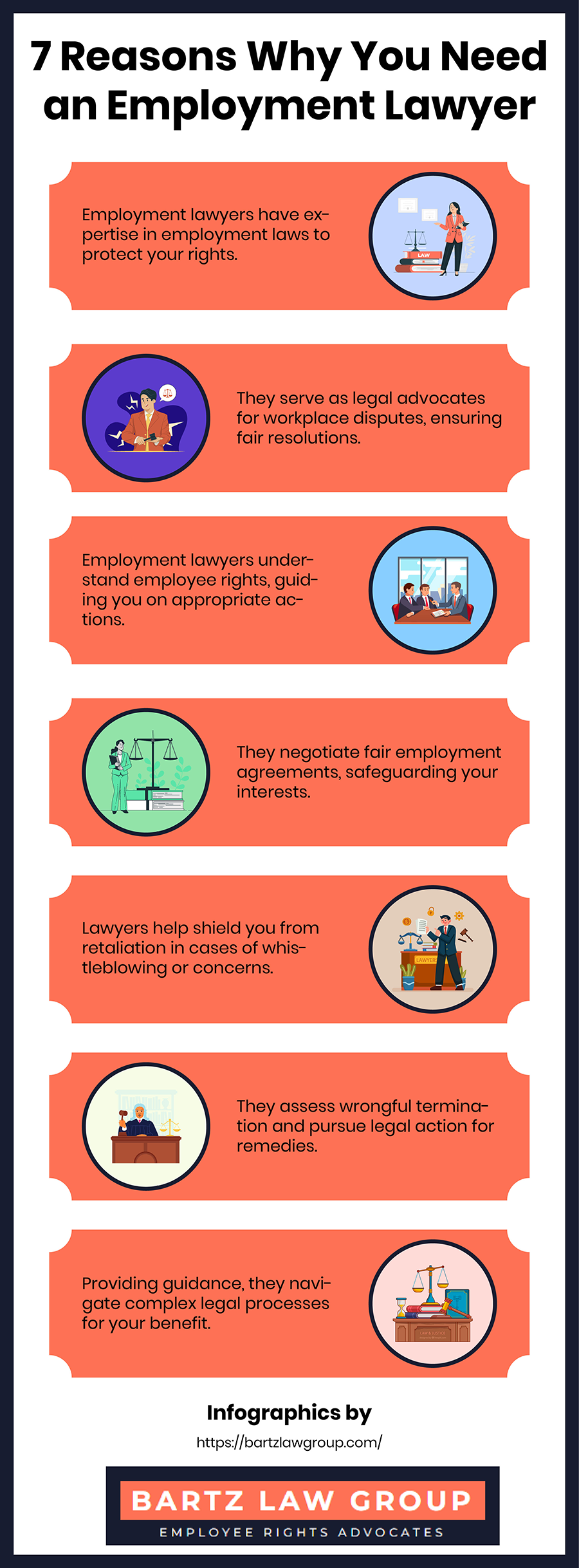
7 Reasons Why You Need an Employment Lawyer [Infographic],

When faced with legal issues related to your employment in California, understanding the nuances and complexities of the legal system is essential. Engaging the services of an experienced employment lawyer in California becomes crucial to navigating through intricate legal processes and working toward achieving a favorable resolution.
These professionals provide the essential legal expertise, support, and advocacy needed to safeguard your rights and claims, ensuring a fair and professional approach to your case. An adept employment attorney in California can assess your specific situation, develop a sound legal strategy, and conduct negotiations with your employer, leveraging their expertise and experience to pursue the best outcome for you.
How Do I Sue My Employer in California?,

Suing your employer in California could come with uncertainty and legal or emotional challenges. You may feel overwhelmed and unsure of your rights and the steps necessary to pursue justice. This article aims to explain the process, providing clarity and direction.
Understand Your Rights
In California, employees are protected by comprehensive labor laws. These laws cover a wide range of issues, including but not limited to discrimination, harassment, wage and hour disputes, and wrongful termination.
The key California employment laws:
- Fair Employment and Housing Act (FEHA). Prohibits discrimination and harassment in the workplace.
- Labor Code. Governs wages, hours, and breaks.
- Whistleblower Protection Laws. Safeguards employees who report legal violations.
Document the Issue
Effective documentation serves as tangible evidence of the issues faced in the workplace. Below is how you can systematically document your experiences:
- Maintain a log of dates, times, and descriptions of incidents. Include emails, messages, or any communication related to the issue.
- If colleagues witnessed any incidents, their accounts can be invaluable. Encourage them to provide written statements if possible.
- Save physical evidence, including emails, memos, or other documents supporting your case.
- If company policies or procedures were breached, document these violations clearly.
Report the Issue to Your Employer
Reporting the issue internally provides your employer with an opportunity to address the problem and serves as an official record of your complaint.
Follow your company’s designated process for filing complaints, typically outlined in the employee handbook. You should describe the issue factually, avoiding emotional language. Stick to the facts and how they have affected your work environment.
Next, save a copy of your report and any acknowledgment or response from your employer. You need this documentation to prove that the employer knew the issue.
Remember, employers are legally obligated to investigate complaints and cannot retaliate against you for reporting.
File a Complaint with a Government Agency
In some instances, before you can sue your employer, you must first file a complaint with a relevant government agency. This is especially true for discrimination and harassment cases.
- Equal Employment Opportunity Commission (EEOC) or California Department of Fair Employment and Housing (DFEH). These agencies are the starting point for discrimination or harassment cases.
- Be aware of the time limits for filing complaints. In California, you generally have up to three years to file a discrimination claim with the DFEH.
- Once a complaint is filed, the agency will conduct an investigation. Provide any necessary information and documentation.
Obtain a “Right to Sue” Notice
Before suing your employer for discrimination or harassment, you must obtain a “Right to Sue” notice from the appropriate government agency (EEOC or DFEH).
After filing a complaint, wait for the agency to complete its investigation. The outcome can lead to mediation, settlement, or a dismissal of the claim.
If the case is not resolved satisfactorily, request a “Right to Sue” notice. This formal document permits you to pursue legal action in court. Be mindful of the time limit to file a lawsuit after receiving this notice – in California, you typically have one year from the date of the notice.
Hire an Employment Attorney
Your first thought might be “Need a lawyer to sue my employer for a successful claim.” A lawyer can provide expert guidance through the complex legal landscape of employment law.
Look for an attorney with a proven track record in employment law cases like yours. An attorney can evaluate the strength of your case, advise on potential outcomes, and develop a strategy tailored to your situation.
File a Lawsuit
Filing a lawsuit against your employer requires careful preparation and adherence to legal procedures. Your attorney will help build a strong case and gather all necessary documents, evidence, and witness statements.
The lawsuit is formally initiated by filing a complaint in the appropriate court. Your attorney will handle this process, including serving the complaint to your employer. They will also manage responses to any defense motions or arguments.
Attend the Trial
If your case proceeds to trial, this is where the outcome of your lawsuit will be determined. Your attorney will prepare you for the trial, including coaching on answering questions and presenting your testimony effectively.
Trials in employment law cases typically involve presenting evidence, witness testimonies, and arguments from both sides. It is a structured process overseen by a judge and possibly a jury.
If you are considering legal action against your employer, consult an experienced employment attorney. They can provide personalized advice and representation tailored to your specific situation.
FAQs
How do I sue my employer in California if they treated me unfairly at work?
You file a complaint, gather proof, then hire a lawyer to guide each step forward.
Do I really need a lawyer to sue my employer, or can I handle it alone?
A good lawyer knows the laws well and can help you win a stronger case.
Can I sue my employer for discrimination if I was treated differently because of my race or gender?
Yes. If your employer treated you unfairly due to race or gender, you can sue.
What counts as workplace harassment, and can I actually sue my employer for it?
Repeated unwanted behavior at work counts. Yes, you can sue and seek real compensation.
How to Fight Back Workplace Bullying in California,

Workplace bullying is an issue that affects numerous employees in California. It can take many forms, from verbal abuse to more subtle psychological tactics, impacting an individual’s health and job performance. In this article, we will explore the definition of workplace bullying, its various manifestations, and the specific California laws that may apply.
The Meaning of Workplace Bullying
Workplace bullying in California encompasses a range of behaviors that can create an intimidating, hostile, or offensive work environment. It typically refers to repeated, health-harming mistreatment of an employee by one or more employees. This mistreatment can include verbal abuse, offensive behaviors, and efforts to sabotage an employee’s work or professional reputation.
In California, although there’s no specific statute that directly addresses workplace bullying, aspects of it can overlap with behaviors covered under existing employment laws. For example, if bullying is based on a protected characteristic like race, gender, or age, it could fall under anti-discrimination laws.
Is workplace bullying illegal in California?
While there’s no specific law that makes general workplace bullying illegal, certain aspects of it can fall under laws that prohibit harassment and discrimination. For instance, if the bullying is related to a protected class under the California Fair Employment and Housing Act (FEHA), such as race, gender, or age, it becomes a legal matter.
The FEHA requires employers to take reasonable steps to prevent and correct wrongful behavior in the workplace. This includes bullying that crosses into harassment or discrimination. If an employer fails to address such issues adequately, they can be held liable.
However, if workplace bullying does not relate to a protected characteristic, it falls into a legal grey area. In these cases, it is not explicitly covered by California employment law, making legal recourse more challenging. Hire a California employment law attorney to help identify if any legal avenues are available, such as a claim for intentional infliction of emotional distress or a hostile work environment.
The difference between workplace bullying and harassment
Workplace bullying refers to repeated, health-harming behavior by an individual or group against a colleague. Bullying can include verbal abuse, intimidation, and other forms of mistreatment. In California, general workplace bullying is not illegal unless it intersects with harassment or discrimination based on protected characteristics. Bullying can be subtle and not necessarily tied to a protected class, making it legally ambiguous.
Workplace harassment is illegal under both California and federal law when it relates to a protected characteristic, such as race, sex, age, disability, and others. Harassment includes unwanted conduct that creates a hostile work environment or results in an adverse employment decision (like being fired or demoted). The law is clear in these instances: employers are required to prevent and address harassment in the workplace.
Your Rights If You Experience Bullying at Work
Many companies have policies against workplace bullying. Review your employee handbook or speak with HR to understand these policies. If bullying occurs, report it according to your company’s procedures.
Keep a detailed record of bullying incidents, including dates, times, what was said or done, and any witnesses. Documentation can be crucial, especially if the situation escalates or if legal action becomes necessary.
Often, resolving the issue internally is the first step. This might involve mediation with HR or, in some cases, a direct conversation with the bully if safe and appropriate.
If bullying is related to a protected characteristic or if it escalates to a level that might warrant legal action (such as creating a hostile work environment or leading to wrongful termination), consult with a California employment law attorney. They can advise you on your rights and potential legal steps.
Utilize external resources such as state labor departments or federal agencies like the Equal Employment Opportunity Commission (EEOC) if the bullying is linked to discrimination or harassment.
Even though California law may not specifically outlaw general workplace bullying, employees are not without recourse. Knowing your rights and the available resources empowers you to act and protect your well-being in the workplace.
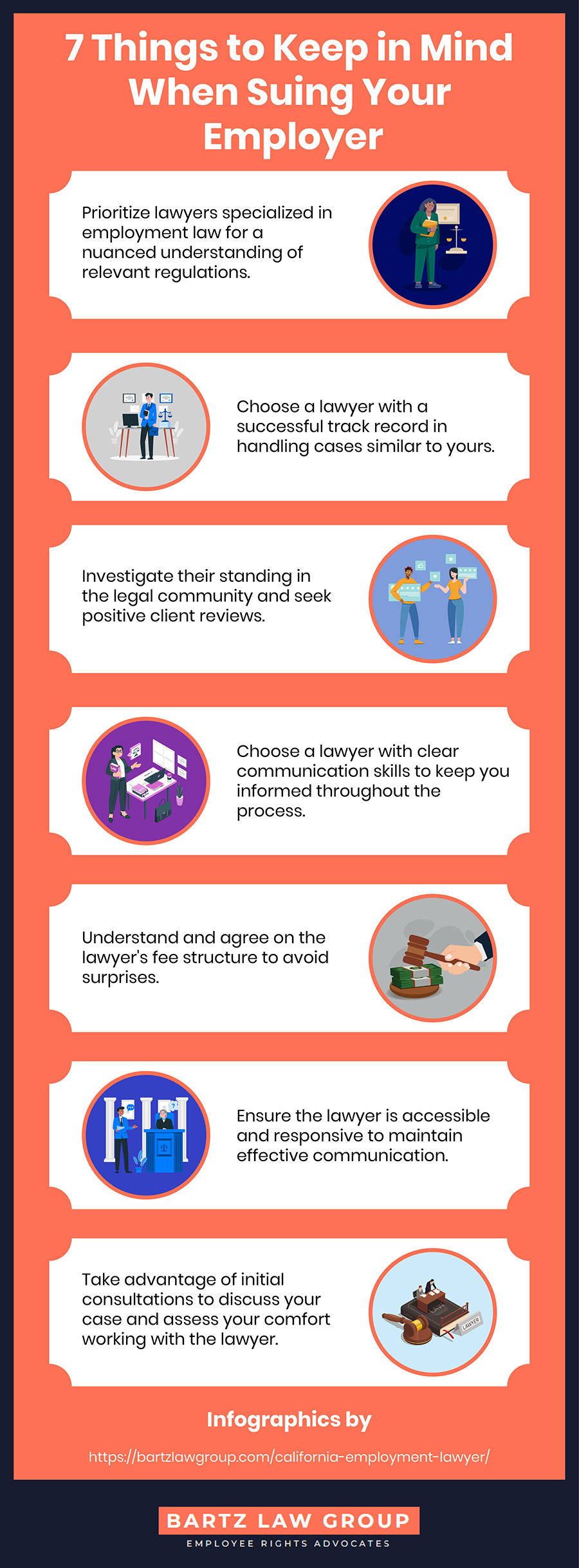
7 Things to Keep in Mind When Suing Your Employer,

When confronted with legal challenges involving your employer, it’s crucial to recognize the intricacies and difficulties of the legal system. Seeking the assistance of a skilled attorney becomes paramount to guide you through the complex legal processes and help you achieve the desired resolution.
These experts offer the necessary legal knowledge, assistance, and advocacy to protect your rights and claims, securing fair and professional handling of your case. A qualified lawyer to sue your employer can evaluate your situation, formulate a legal strategy, and engage in negotiations with your employer based on their expertise and experience.
What Does “Employment At Will” in California Mean?,

“Employment at will” is a complex factor of employment laws in California for many employers and employees alike. The “at-will” concept suggests that you or your employer could terminate the job contract at will. This article explains this rule, its exceptions, and what they mean for employees and employers in Alaska.
The Meaning of the “At-Will” Employment Rule in California
In California, the principle of “at-will” employment forms the foundation of most employment relationships. This means that either the employer or the employee can terminate employment at any time, for any reason, or no reason at all. This flexibility, however, is tempered by several key exceptions that protect employees from unjust termination.
The Meaning of “Implied Contract” Exception
One significant exception to the at-will rule is the implied contract exception. It arises when there is an unwritten, yet legally binding agreement between the employer and employee that suggests employment cannot be terminated without good cause.
Factors such as the employer’s personnel policies, duration of employment, and any assurances of continued employment can indicate the presence of an implied contract.
The Meaning of an Implied Covenant of Good Faith and Fair Dealing
Another layer of protection for employees is the implied covenant of good faith and fair dealing. This unwritten promise requires all parties in a contract to act in good faith and deal fairly with one another. Violations of this covenant, such as firing an employee in bad faith or violation of company policies, can support a claim for wrongful termination.
The Meaning of “Public Policy” Exception to At-Will Employment
The public policy exception plays a crucial role in safeguarding employees who are terminated for reasons that violate important public policies. This includes being fired for refusing to break a law, performing a legal obligation, exercising a legal right, or reporting legal violations. The underlying policy must be fundamental, well-established, and serve the public interest.
Suing Your Employer for Fraud as a Result of Wrongful Termination
Fraud or misrepresentation is another viable exception to the at-will employment rule. This occurs when an employer makes false representations that lead to an employee suffering damages. With the help of employment lawyers in California, employees can sue for damages incurred due to accepting employment under pretenses or for losses related to wrongful termination.
Can More Than One Exception to At-Will Employment Apply To My Case?
It is not uncommon for more than one exception to apply in cases of wrongful termination. This means an employee’s situation might fall under multiple protected categories, providing them with several legal avenues to explore.
Can I Sue My Employer Under an Exception To At-Will Employment If I Resign?
In cases of constructive termination, where an employer makes working conditions intolerable, forcing an employee to resign, legal action is still possible. This is recognized under California’s wrongful constructive termination laws.
If you believe you have been wrongfully terminated or are facing legal issues related to employment in California, consulting with a skilled employment lawyer can provide you with the guidance and representation necessary to maneuver should you face a lawsuit or need to file one.
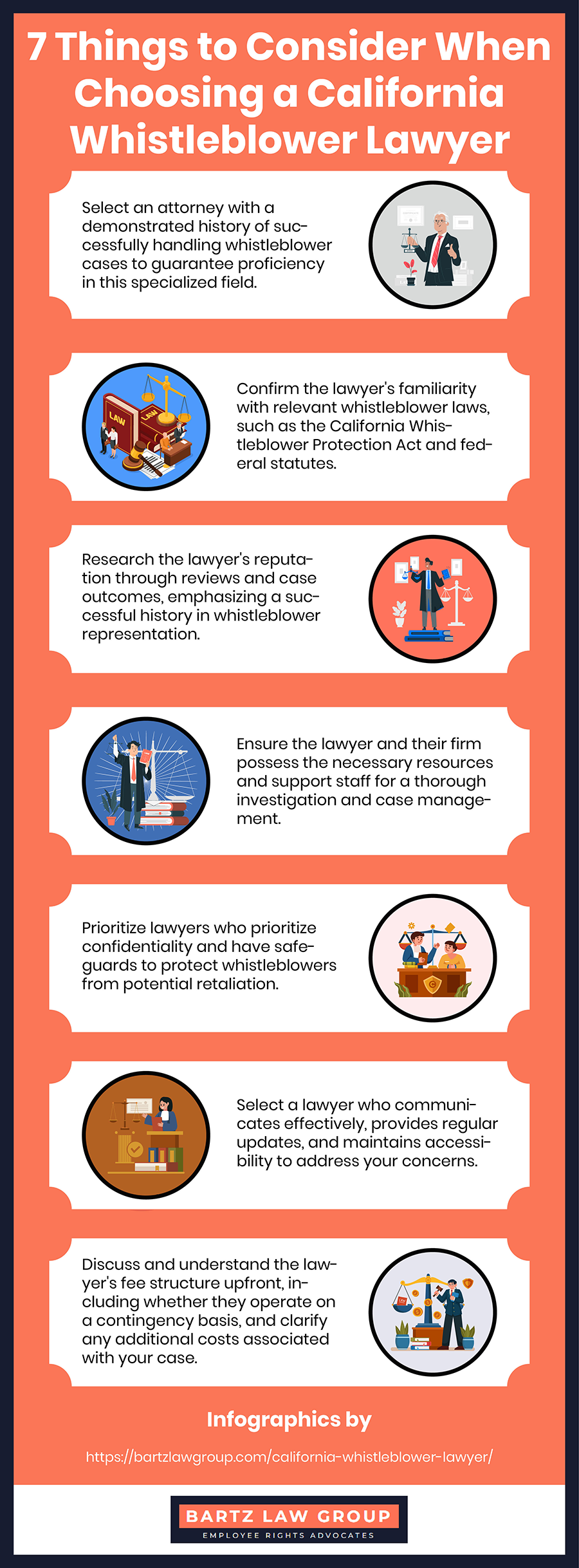
7 Things to Consider When Choosing a California Whistleblower Lawyer,

With their diverse range, whistleblower laws serve as crucial safeguards for state and federal employees in cases where companies or employers violate established federal or state laws. These laws, by design, empower employees to speak out against misconduct, providing a platform for reporting violations without the looming threat of retaliation.
In essence, whistleblower laws in California stand as a testament to the commitment of legal systems to uphold justice and ensure accountability. Navigating the complexities of whistleblower cases necessitates the expertise of a California whistleblower lawyer, who specializes in guiding individuals through the intricate legal processes in promoting transparency and ethical practices within organizations.
What Is A Separation Agreement In California Employment Law?,

A separation agreement when getting employed in California is pivotal and has significant implications for both employers and employees. Below, you learn about separation agreements in California, exploring their nature, requirements, and the rights it involves, with the help of employment lawyers.
Is an Employee Separation Agreement a Binding Contract?
An employee separation agreement is a legally binding contract in California. The agreement is formed between an employer and an employee on the verge of termination, with the employer offering a severance package. For the employee to receive this package, they must relinquish certain rights against the employer.
Contract Requirements
For a separation agreement to be legally binding in California, there are key elements that must be present:
- An offer;
- Acceptance of that offer; and
- Consideration
These are agreed-upon exchanges of value by each party. The employer offers monetary or other benefits, while the employee gives up their legal rights to sue the company. However, the contract’s purpose must be lawful, as any agreement breaking the law would be void.
Voidness of Separation Agreements
A separation agreement in California may become void if it requires an employee to give up legally non-waivable rights. In such cases, while the unlawful provision is void and unenforceable, the rest of the agreement might still stand due to the inclusion of severability provisions.
Commonality of Separation Agreements
Not every termination in California involves a separation agreement. They are more common in situations like layoffs or downsizing, often offered to maintain the employer’s reputation, even when there is no concern about potential lawsuits.
What Rights Does It Require California Workers To Relinquish?
In California, when workers enter into a separation agreement, they are often required to relinquish various legal rights as part of the deal. The specific rights that a worker might waive include:
Waiver of Claims
Workers, in signing separation agreements, often waive rights to file claims related to wrongful termination, discrimination, class action lawsuits, and other potential claims unknown at the time of signing. The waiver details are specified in the severance agreement, and once waived, these rights cannot be invoked later.
Rights that Cannot be Waived in a Separation Agreement
Certain rights cannot be waived in a separation agreement under California law. These non-waivable rights ensure that certain fundamental protections remain intact for employees, even in the context of a separation agreement. These rights include:
Age Discrimination Claims
Waiving rights to file age discrimination claims under the Age Discrimination in Employment Act (ADEA) requires compliance with the Older Workers Benefit Protection Act (OWBPA). This includes clear, unambiguous language in the waiver, advisement to consult employment lawyers in California, and specified periods for consideration and revocation of the waiver.
Severability Provisions
If a separation agreement includes a non-waivable right, that portion is not enforceable by California courts. Most agreements have a severability provision, ensuring the rest of the agreement remains enforceable if a part is found unenforceable.
Common Post-Termination Restrictions on Departing Workers in California
These restrictions, also known as restrictive covenants, are designed to protect the employer’s interests after an employee leaves the company. Some of the most common post-termination restrictions include:
- Non-Disclosure Agreements (NDAs). NDAs restrict former employees from sharing confidential information.
- Confidentiality Clauses. These clauses prevent the disclosure of certain information about the employer or the company’s operations, strategies, and more.
- Non-Disparagement Clauses. These clauses restrict former employees from making damaging statements about the employer or the company.
- Non-Solicitation Agreements. These agreements aim to prevent former employees from soliciting the employer’s clients, customers, and other employees.
Non-Compete Clauses
California employment law generally deems non-compete agreements unenforceable. However, they are still frequently included in contracts as employers attempt to exert control over former employees.
Knowing what you could do or not do after switching jobs under separation agreements in California binds the employers and employees. For further guidance, consulting with employment lawyers in California is advisable, especially given the potential complexities and legal implications involved in these agreements.
When to Sue An Employer,

Do I need a lawyer to sue my employer? This is a common question among employees facing workplace grievances.
Each case is unique, so the answer to this question can vary. However, I would first seek legal advice to determine if I need a lawyer to sue my employer.
When to Sue My Employer
Here are 10 instances when employees may be justified to bring legal action against their employers:
Discrimination
If an employee is discriminated against based on race, gender, age, religion, or other protected characteristics, they may have grounds for legal action.
Harassment
Persistent harassment, whether verbal, physical, or through other means, can warrant legal action if the employer fails to address the issue adequately.
Retaliation
Employees have the right to report unlawful conduct without fear of retaliation. If they face adverse actions in response to reporting, legal action may be justified.
Unsafe Working Conditions
If an employer knowingly exposes employees to hazardous conditions without taking appropriate measures, employees can seek legal recourse.
Breach of Employment Contract
Common violations of the terms of an employment contract include:
- Unfair remuneration
- Wrongful termination, and
- Mandatory leave denial, among others.
In such instances, legal action may be warranted.
Wage and Hour Violations
Unpaid overtime, withheld wages, or failure to adhere to minimum wage laws can justify legal action against an employer.
Whistleblower Protections
Employees who report illegal activities within the company are legally protected. That said, retaliation against whistleblowers can lead to legal consequences for employers.
Family and Medical Leave Act (FMLA) Violations
Among other employment benefits, employees are entitled to annual leave. So, employers who interfere with this employee’s rights may face legal action.
Privacy Invasion
Employers who violate employees’ privacy rights, such as unauthorized surveillance or accessing personal information, may face legal consequences.
Failure to Accommodate Disabilities
Employers must reasonably accommodate employees with disabilities. Legal action may be justified if an employer fails to provide necessary accommodations.
Best Practices for Suing an Employer
Here are five best practices to follow when filing legal action against employers:
Document Everything
Maintain a detailed record of incidents, communications, and any relevant documents. This documentation serves as crucial evidence in legal proceedings.
Follow Internal Procedures
Exhaust internal channels for complaint resolution before pursuing legal action. Following the recommended procedures demonstrates the employees’ good-faith effort to resolve the issue.
Seek Legal Counsel
Consult with an experienced employment attorney. These professionals can help you assess the strength of the case, understand legal options, and navigate the complexities of employment law.
Preserve Evidence
Ensure the preservation of all relevant evidence, including emails, messages, and witness statements. By doing so, you enhance the credibility of your claim.
Timely Action
Adhere to statutory time limits for filing legal claims. Delay can jeopardize the case, so prompt action is essential to protect legal rights and seek appropriate remedies.
Employees should consult employment lawyers to assess the specifics of their situation and determine the appropriate course of action. However, understanding these instances is the first step to making informed decisions.
FAQs
Can I sue my employer if my company is not paying overtime?
Yes, you can. A wrongful termination lawyer can also help recover unpaid overtime wages you are owed.
How do I know if I have a wrongful termination case?
If you were fired unfairly or illegally, talk to a wrongful termination lawyer right away about your rights.
Should I hire a wrongful termination lawyer in Los Angeles or San Diego?
Yes, a local wrongful termination lawyer knows state laws well and can fight hard for your case.
What should I do first if I want to sue my employer for wrongful termination?
Write down everything that happened. Then call a wrongful termination lawyer to review your situation fast.
The Meaning of “Adverse Employment Action” Under California Law,

Adverse employment action is any shift in your job’s terms and conditions that is unfavorable to you. From overt acts like a sudden termination to more subtle ones, such as a diminishment of benefits or a stunt of career advancement. This post delves into the meaning of “adverse employment action,” in employment law, particularly concerning Title VII and the Fair Employment and Housing Act (FEHA) in California.
Adverse Employment Action Under Title VII
Under federal employment law, Title VII of the Civil Rights Act of 1964 prohibits discrimination in the workplace based on race, color, religion, sex, and national origin. It also safeguards employees from retaliation for asserting their rights under the act or participating in related proceedings. If unsure whether your employer’s acts are adverse, hire a California employment law attorney for legal counsel.
Discrimination
Under Title VII, an adverse employment action includes discrimination in employment terms. Examples are:
- Discharge
- Layoffs
- Demotions
- Reductions in salary or benefits
- Refusals to promote or retracting job offers
However, not all workplace setbacks are adverse under Title VII. Examples include:
- Assigning unfavorable but job description-compliant tasks
- Not nominating for awards
- Counseling for poor performance
- Adding reprimands to personnel files
- Transferring without affecting position or compensation
Retaliation
A lower threshold than other adverse employment actions characterize retaliation under Title VII of the Civil Rights Act 1964. It is designed to protect employees from punitive measures taken by employers as a response to the employees exercising their legal rights.
Retaliatory actions can vary widely but typically involve any negative change in the employment situation after an employee has made a discrimination claim, participated in an investigation, or supported another employee’s claim. These actions might include:
- Demotions.
- Salary reductions.
- Changes in job assignments or shifts are less desirable.
- Exclusion from training or professional development opportunities.
- Increased scrutiny or unfair performance evaluations.
Adverse Employment Action Under State Law in California
FEHA’s definition of adverse employment action is broad, including actions materially affecting employment terms, conditions, or privileges. Examples include:
- Wrongful termination
- Demotion
- Harassment
- Administrative leave
- Refusing promotions
- Unjustifiably poor performance evaluations
- Reassigning jobs with adverse consequences
Conversely, actions like workplace criticisms, ostracism not amounting to harassment, and unfulfilled threats of adverse actions are not considered adverse under FEHA.
Cases In Which Adverse Employment Action Apply
In discrimination scenarios, adverse employment actions are fundamental in substantiating a claim. It is not sufficient to merely prove the presence of discriminatory behavior.
You must demonstrate that this behavior led to an adverse employment action, directly impacting your employment status or conditions. For example, wrongful termination, a demotion without cause, or a significant reduction in salary or benefits.
In retaliation cases, the focus is on whether the employer’s actions would deter a reasonable person from engaging in protected activities. For example, an employee who files a harassment complaint and subsequently faces unjustified negative performance evaluations or exclusion from professional development opportunities might be experiencing retaliation.
While not as blatant as termination or demotion, these actions can still constitute adverse employment actions as they negatively affect the employee’s career trajectory and work environment.
Petitioning an adverse employment action in California requires a thorough understanding of the law. So, if you are in such a situation, hire an employment law attorney to guide you through this challenging legal landscape.